Great Rumpuscat
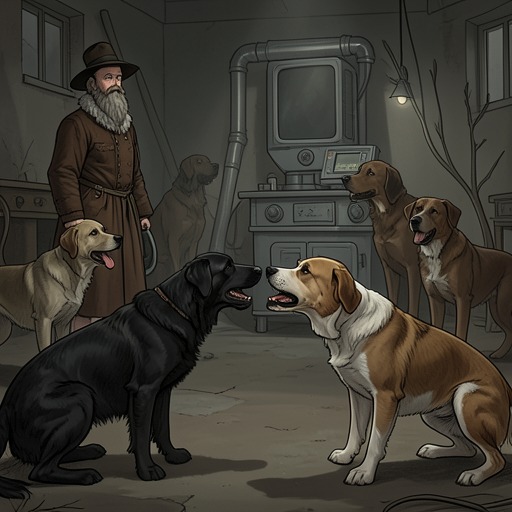
Old Possum's Book of Practical CatsGreat Rumpuscat is a briefly seen but decisive figure in the account of the street disturbance involving the Pekes and the Pollicles. He emerges from a small basement flat with a blazing glare and an enormous yawn; his appearance is enough to make the opposing groups flee. The episode gives him no biography or spoken explanation. Instead, it makes his effect on the scene his defining feature: the confrontation gives way to a sudden, complete dispersal.
Identity and Introduction
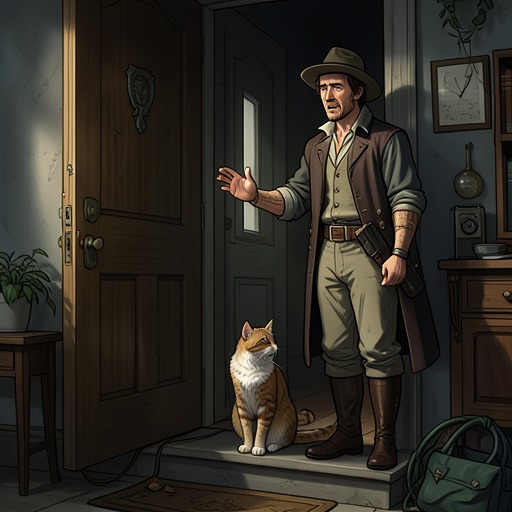
Great Rumpuscat enters at the moment when the neighbors’ fear has become serious enough for them to ring the Fire Brigade. The narrative marks his arrival as abrupt: he stalks out of a small basement flat, a modest and enclosed place from which a figure of startling force now appears. The contrast between the flat’s smallness and the scale of the reaction gives the entrance its theatrical charge without explaining where he has been or why he comes out.
His first impression is constructed from a few emphatic details rather than from a broader description of his character. His eyes blaze like fireballs; he gives a great yawn, and the account calls attention to his remarkable jaws. When he looks through the bars of the area, he appears fiercer and hairier than anything the narrator can readily compare him with. The passage offers no account of his thoughts, history, or intentions. It presents a visible figure and measures him by the alarm his presence inspires.
The Sudden Intervention
The sequence turns on the change in the Pekes’ and Pollicles’ behavior. Before Great Rumpuscat appears, the disturbance has become frightening to the neighbors, who are preparing to summon the Fire Brigade. Once he is visible, his blazing eyes and yawning jaws are enough to make the two groups take warning. The narrative does not describe him attacking either side or issuing a command. His intervention works through appearance: the threat of what he might do is sufficient to alter what everyone else does.
The bars matter to the staging because Great Rumpuscat is seen looking out through them. The passage places a boundary between the watching crowd and the figure in the area, then directs attention to his face and jaws. It does not explain the purpose or layout of the area, so the scene’s force rests on the contrast it actually supplies: the cat is framed behind bars, yet his look carries beyond them and changes the behavior of those outside. The short description concentrates the reveal in a sequence of visible gestures rather than giving the character a speech or a narrated plan.
The Leap and the Empty Street
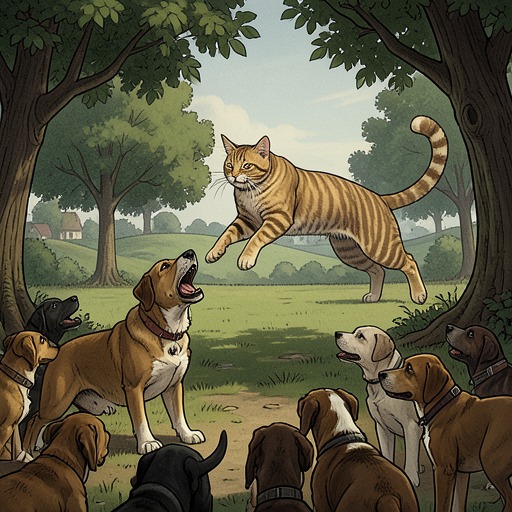
After the warning produced by his glare and yawn, Great Rumpuscat looks at the sky and gives a great leap. The account makes the leap the final movement before the Pekes and Pollicles scatter. They flee all together, compared to sheep in their sudden dispersal. No further pursuit or fight is described; the consequence shown is their retreat from the street. The scene therefore gives the leap a clear place in the action while stopping short of explaining whether it is a threat, a display, or simply the last element in an already intimidating appearance.
The aftermath is measured by the Police Dog’s return. When he comes back to his beat, not one of the participants remains in the street. The account does not say that Great Rumpuscat leaves, where he goes, or what happens to the neighbors who had feared the disturbance. It closes instead on the cleared street, making the absence of the crowd the concrete result of his entrance and leap. His role is complete within that compact chain of events: he appears, the Pekes and Pollicles take warning and scatter, and the Police Dog finds no one there.
Narrative Role
Great Rumpuscat is characterized primarily through a sudden reversal in the scene’s balance of power. The narrative first registers fear among the neighbors, then reveals him in vivid, exaggerated details, and finally shows the opposing groups disperse. The description’s intensity—fire-like eyes, an astonishing yawn, remarkable jaws, and a leap—makes his force legible without supplying a fight or a stated motive. His effect is both immediate and observable: the crowd that had filled the street is gone by the time the Police Dog returns.
The episode leaves the character deliberately bounded by what can be witnessed. Great Rumpuscat is not given dialogue, a relationship to the neighbors, or an explanation of his actions. Nor does the passage establish that he personally caused the initial disturbance. What it does establish is his capacity, in this encounter, to stop the Pekes and Pollicles through the fear his appearance commands. The difference between his brief display and the empty street afterward is the measure of his significance: a small number of gestures becomes the scene’s decisive turn.